Personal security
How to Freeze Your Credit
A freeze stops anybody from opening credit in your name, including you, until you lift it. It is free at all three bureaus, it is required by federal law to be free, and nothing else comes close you can do about identity theft.
- Cost
- Free, by federal law
- Bureaus to do
- All three, separately
- Time
- About 15 minutes total
- Affects your score
- No
Breaches are constant and Social Security numbers are cheap. A freeze doesn’t stop your data being exposed — that has already happened — it stops the exposure being converted into credit in your name.
You have to do it at each bureau separately. Freezing one does nothing at the other two, and a lender may pull from any of them. Set aside fifteen minutes and do all three in one sitting.
A freeze is not a fraud alert and not credit monitoring. A fraud alert asks lenders to take extra care. Monitoring tells you after something has happened. A freeze actually blocks the pull. Only the freeze prevents anything.
TransUnion
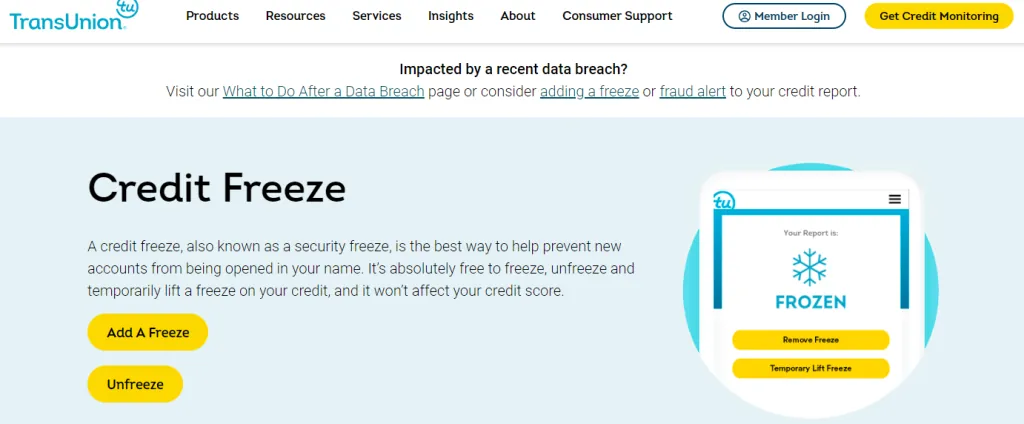
Go to TransUnion’s freeze page. You’ll need to create an account if you don’t have one. Once you’re in, the same screen lets you place the freeze, lift it, dispute an entry or set a fraud alert. You can schedule a temporary lift for a specific window, which is what you want when a loan application is coming.
Experian
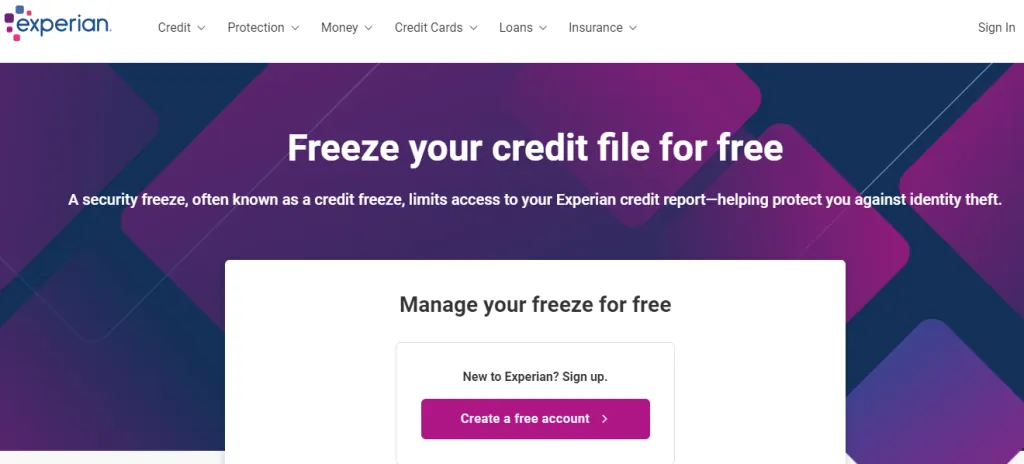
Go to Experian’s freeze center and sign up or log in. Experian is the most aggressive of the three about upselling monitoring during the process. Ignore all of it. The freeze is free and you are not required to buy anything to get it.
Equifax
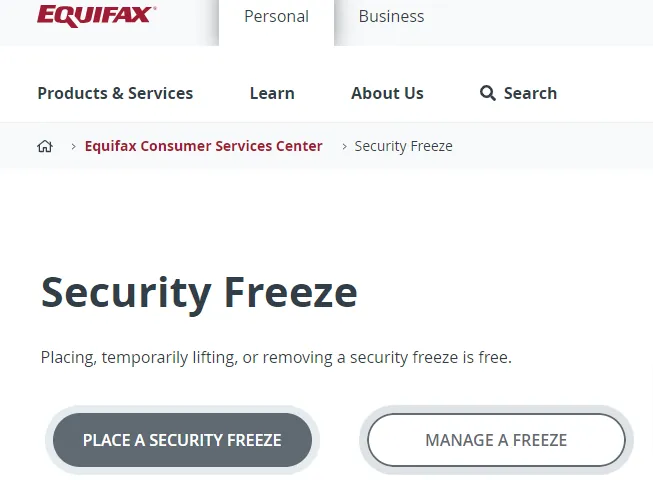
Go to Equifax’s security freeze page. Placing, lifting and removing are all free. Equifax offers PIN codes for managing the freeze; you can use them, but the account login is usually simpler and harder to lose.
What a freeze does not do
It doesn’t touch your existing accounts. Your cards keep working, your loans keep running, your score is unaffected. All it does is stop new parties pulling your report, which is what stops new accounts being opened.
Some lenders don’t rely on a credit score at all, but almost all of them will decline an application they can’t pull a report for. That’s the mechanism.
Lifting it when you need to
Lifting is as easy as setting it. Applying for a mortgage, a car loan or a card means lifting the freeze first — but you can lift it for a defined window with a start and end date, and it re-freezes automatically when the window closes. Plan a day or two around the application and you never have to remember to put it back.
One practical warning: find out which bureau the lender uses before you lift, if you can. Otherwise lift all three, because a single missed bureau will stall the application and nobody will tell you why.
The rest of the household
Freeze your spouse’s file too, and your children’s. A child’s Social Security number is the most valuable kind to steal, because nobody checks it for eighteen years. All three bureaus will create and freeze a minor’s file on request. It takes documents and a bit of patience, but it’s worth an afternoon.
If a parent is in care or otherwise not managing their own affairs, freeze theirs as well. That group gets targeted specifically.
Resource
SkipLook
Membership access to skip tracing tools and people-search resources, including the extended detail that the free sources on this page do not carry.
See SkipLook