Public records
City Open Data Portals
A parking ticket is a dated record of a specific vehicle at a specific address. Hundreds of cities publish them, free, searchable, with no request to file — and almost nobody in this field uses them.
- Cost
- Free, no account
- Search by
- Plate, address, date, agency
- NYC dataset size
- Tens of millions of rows
- Doesn’t include
- The registered owner
Open data portals were built for civic transparency and journalism. They happen to be excellent investigative sources, because a city publishing its operational records is publishing a great deal of dated, addressed, vehicle-linked detail that would otherwise take a records request to obtain.
New York City runs the largest and best of them, so it’s the example here. The approach transfers — Chicago, Los Angeles, Boston, Seattle, Austin, San Francisco and several hundred others run comparable portals, most on the same underlying platform with the same query interface.
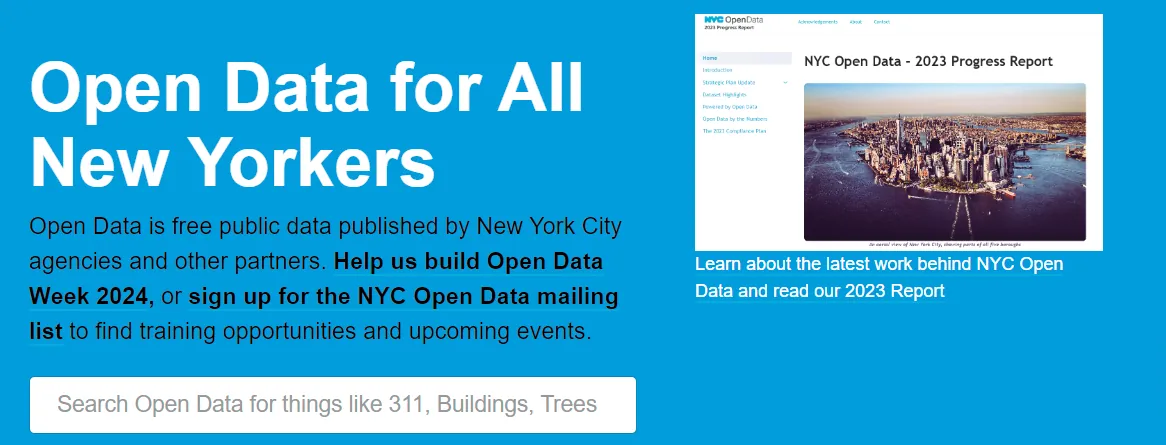
The parking dataset
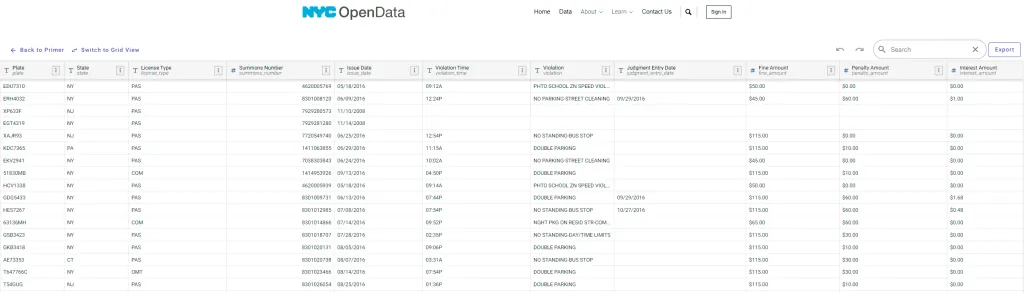
The one to know is Open Parking and Camera Violations. It runs to tens of millions of rows and each one carries plate number, plate state, license type, issue date, violation time, the violation code, the fine amount, the location and the issuing agency.
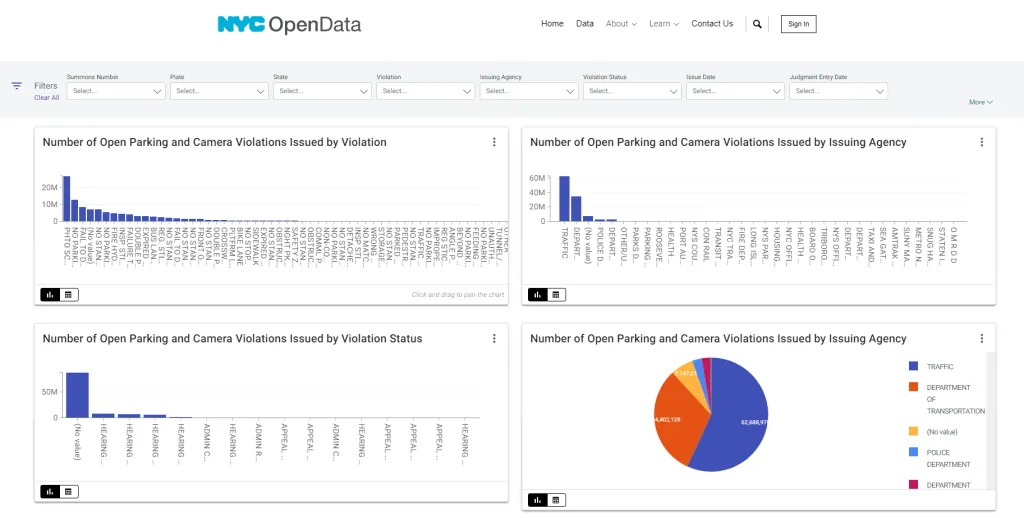
The filters are what you actually want. Query the plate and you get every citation issued to that vehicle, in order, with where and when. That’s a movement history for a car, assembled from a public source, at no cost.
There’s also a View Summons link on many records, which produces images of the citation itself, front and back. It shows the plate, the location, the vehicle details and the officer’s notes.
What it will not give you
The registered owner. That is DMV data, protected by the Driver’s Privacy Protection Act, and it requires a permissible purpose through the proper channel. The open data tells you about the vehicle, not the person.
Which is still worth a great deal. If you already have a plate from another source, the citation history establishes where that vehicle has been and when — and a pattern of tickets on the same block at the same hour is a residence or a workplace whether or not anyone has told you so.
Working it in practice
- Plate to pattern. Filter on the plate, sort by date, map the locations. Repetition at the same address is the finding
- Address to plates. Filter on a street and see which vehicles are repeatedly cited there. Useful when you know the location and not the car
- Date bounding. A citation is a hard timestamp for a vehicle at a place. On the right day, that’s a fact you can put in a report
- Export it. Every one of these portals will produce CSV. Do the analysis in a spreadsheet rather than in the browser
The rest of what cities publish
Parking is the well-known one. The others are frequently more useful and get looked at less:
| Dataset | What it gives you |
|---|---|
| Building permits | Owner or contractor name, property address, work described, dated. Money being spent on a property |
| Housing and health inspections | Landlord and management company names tied to addresses |
| 311 service requests | Complaints by address, with dates. Establishes occupancy and conditions |
| Business licenses | Trading names, addresses, responsible parties |
| Restaurant inspections | Operator names and addresses, inspected regularly |
| Payroll | Municipal employees by name, title and salary |
| Vehicle and taxi registrations | Licensed drivers and vehicles, where the city licenses them |
Building permits are the sleeper. Somebody who claims they can’t pay, with a $180,000 permit filed on a property last spring, has a problem that a dataset just handed you.
Finding the portal for a city
Search the city name with open data. Most run on Socrata, which means the same query interface, the same filtering and the same CSV export you see here. A number of states and counties run their own as well, and county-level data is where property, permit and court information tends to live.
These portals don’t replace a records request. What they do is answer the questions that would otherwise become a request — instantly, at no cost, and without putting your name in front of the agency.
Go deeper
AI Essentials for Investigators
These datasets run to millions of rows. The course covers using AI to sift large volumes of data quickly, spot patterns and connect what’s in front of you. 90 minutes, 14 lectures, $49.99.
See the course